Migration news · 19 November 2026
On 18 November 2026 Bulgaria’s National Assembly passed, at second and final reading, amendments to the Foreigners in the Republic of Bulgaria Act (ZChRB). Below we set out the key changes approved by MPs in the plenary session, together with the relevant legal clarifications.
The law has not yet entered into force.
Under the standard procedure it must be signed by the President (who has up to 15 days to do so) and then published in the official journal, the State Gazette (Darzhaven Vestnik). The amendments will take effect 3 days after publication, unless the transitional provisions set different dates for particular articles.
Permanent residence: a mandatory stay of 6 months and 1 day
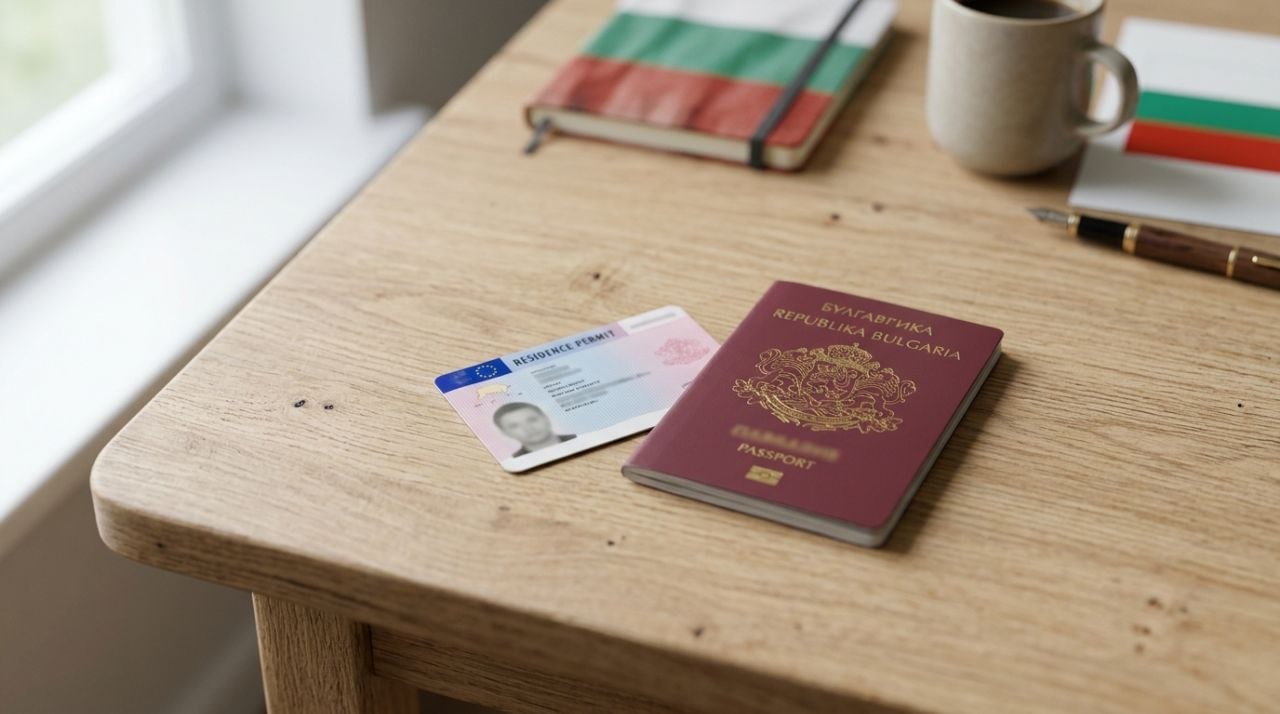
The headline change concerns foreign nationals with permanent residence status. The law establishes that a permanent residence permit may be withdrawn if its holder spent less than 6 months and 1 day in Bulgaria during the previous calendar year.
- Who is exempt: an exception has been made for investors who obtained permanent residence on the special investment grounds set out in the law.
- What to watch out for: during the parliamentary debate it was noted that the final text does not include automatic exemptions for investors’ family members, nor a separate list of valid reasons for prolonged absence (such as medical treatment abroad).
The rule applies to permanent residence permit holders: the status may be withdrawn if the holder spent less than 6 months and 1 day in Bulgaria in the previous calendar year.
Residence permits: what you need to know before the final text is published
There is much public discussion of a possible link between renewing a long-term residence permit for commercial representatives and digital nomads and actually living in Bulgaria for at least half the validity period of the previous card.
The official parliamentary summaries of the 18 November vote focus primarily on the ‘6 months and 1 day’ rule for permanent residence. The final wording for all residence permit grounds will become clear as soon as the adopted version of the law is published in the State Gazette.
Labour migration and worker protection
A substantial block of amendments brings Bulgarian legislation into line with Directive (EU) 2024/1233:
- Single permit for residence and work: the maximum time for processing an application is capped at 2 months. In complex cases the procedure may be extended by no more than 30 days. After 6 months of employment, the foreign national gains the right to change position with the same employer.
- Protection on dismissal: if a foreign national loses the right to work through the employer’s fault, the employer must pay them compensation. In addition, the permit is not withdrawn in the event of temporary unemployment of up to 3 months (or up to 6 months for holders of permits issued for more than 2 years).
- Seasonal workers: where an employer provides accommodation for a seasonal worker, it must conclude a separate written tenancy agreement with them on transparent terms.
Health insurance for certain categories of residence permit holders
The amendments widen access to the compulsory state health insurance system (NHIF) for a number of categories of foreign nationals holding long-term residence permits — in particular, researchers from third countries and specialists holding a single work permit. Until now these categories have had to rely solely on private insurance.
For other residence permit grounds (financially independent pensioners, commercial representatives and others) the procedure remains unchanged.
Document processing times
Through the transitional provisions of the Foreigners Act, amendments have been made to the Bulgarian Identity Documents Act: the standard processing time for an identity card (lichna karta) has been cut from 30 to 20 days. Processing times for the fast-track service (up to 3 working days) and the express service (up to 8 working hours) remain unchanged.
What happens next
Under the Bulgarian Constitution, the next steps are as follows:
- Review by the President: after the vote in the National Assembly, the text of the law is sent to the President of Bulgaria for signature. The President has 15 days from receipt of the document either to issue a decree promulgating it or to impose a suspensive veto and return the law to parliament.
- Publication: if the President signs the decree, the law is published in the official State Gazette (Darzhaven Vestnik).
- Entry into force: as a rule, the law takes effect 3 days after publication (unless the text itself sets a specific different date for particular provisions).
Sources
- Transcript of the plenary session of the National Assembly of Bulgaria of 18.11.2026 (parliament.bg).
- State Gazette (Darzhaven Vestnik) — official publication of legislation.
We will update this article with the exact article numbers as soon as the text is promulgated in the State Gazette. This article is for information only and does not constitute legal advice.